+

Prioritising business challenges & creating new digital propositions with embedded CX research

>
areas of expertise
ux research & experience mapping
human centred design
product & design strategy
product optimisation & growth
service design
rapid prototyping
A woman stood in front of a large journey map. placed up on the wall of an office.

Established in 1937, the VW Group sells passenger cars under the Audi, Bentley, Cupra, Jetta, Lamborghini, Porsche, SEAT, Škoda and Volkswagen brands.

When we were approached, VW & Audi faced a series challenges in delivering a seamless customer experience across their diverse product offerings and touch points, exacerbated by a fragmented organisational culture, differing priorities and a limited understanding of customer pain points, hindering their ability to progress and develop an effective innovation strategy.

>
objectives
Our first objective was to build a clear, end-to-end understanding of the actual customer experience, beginning with the Volkswagen brand and later extending into the Audi retail network. Both organisations were experiencing rising customer anxiety, fragmented digital and in-centre experiences, along with internal uncertainty around where the biggest problems actually sat. With hundreds of touchpoints across research, purchase, in-life servicing and end-of-contract, the business needed a single, reliable view of the journey that could cut through assumptions and give teams a shared place to start.

The goal was to uncover the specific frictions shaping customer behaviour, quantify where they occurred, and visualise the emotional impact across the whole lifecycle. This work needed to act as the “10,000-foot view” single source of truth, grounding decisions, surfacing quick wins, and highlighting the areas where deeper exploration or organisational change would be needed.
Equally important was the cultural objective. The organisation needed alignment, confidence and a shift toward customer-centred thinking, following a number of year's worth of negative press surrounding them. Our engagement was designed not only to diagnose problems, but to create internal momentum: bringing stakeholders together, generate buy-in, and shape a clear North Star vision backed by evidence rather than intuition.

This foundation would ultimately enable the teams to prioritise investment, validate new product and service concepts, and begin designing more consistent, predictable and human experiences for both customers and employees across the VW and Audi ecosystems.
>
initial focus areas
A pen, ruler and paintbrush in a mug
— 01

Create a unified, end-to-end view of the internal & external journey

A hand holding a digital device
— 02

Identify and prioritise high-impact frictions & opportunities

A wallet
— 03

Build alignment and customer-centricity across siloed teams

A wallet
— 04

Establish a clear strategic direction for future products and services

>
THE approach
Our approach was based on our home-brew Friction Mapping framework, a qualitative, conversation-led approach that helps us understand what people actually go through and experience. This first-person evidence was key to the needs of VW, but so was the requirement for us to evolve it, incorporating statistical significance as a key factor...
Adapting what can be a time-consuming process - speaking to people, usually in a familiar environment, then comparing and synthesising each conversation - was a real challenge. We needed the insight that came from direct conversations with people inside and outside the business, but we also needed to develop a system for more accurately measuring the various experiences relative to each other and the impact on the business.

This meant creating a scientific formula for how we could measure and combine several factors, to be used as modifiers for how we then record each 'event' on the timeline, then pattern matched with others to combine into an impact gravity, giving us a scoring system we could apply to everything across the board. This scoring needed to be easy to reference, and allow the maps to act as a visual fulcrum when it comes to start the process of solution design. This will then be a critical element for empowering both the stakeholder and client teams to share a common language, bringing the rest of the business along with them (with little to no context), and for us all to co-design what comes next.


>
friction mapping 101
— stage one
Immersion
Getting under the skin of the problem by understanding the business context, existing knowledge and the realities everyone is dealing with.
— stage two
Stakeholder research
Speaking with the people leading each vertical inside the organisation to uncover internal challenges, assumptions and operational truths that shape the customer experience.
— stage two
Data, sector & competitor review
Reviewing existing data, market trends and competitor behaviours to understand how the wider landscape influences customer expectations.
— stage three
Customer research
Holding open, honest conversations with real customers to understand what they’re trying to do, what gets in their way and why.
— stage four
Field research
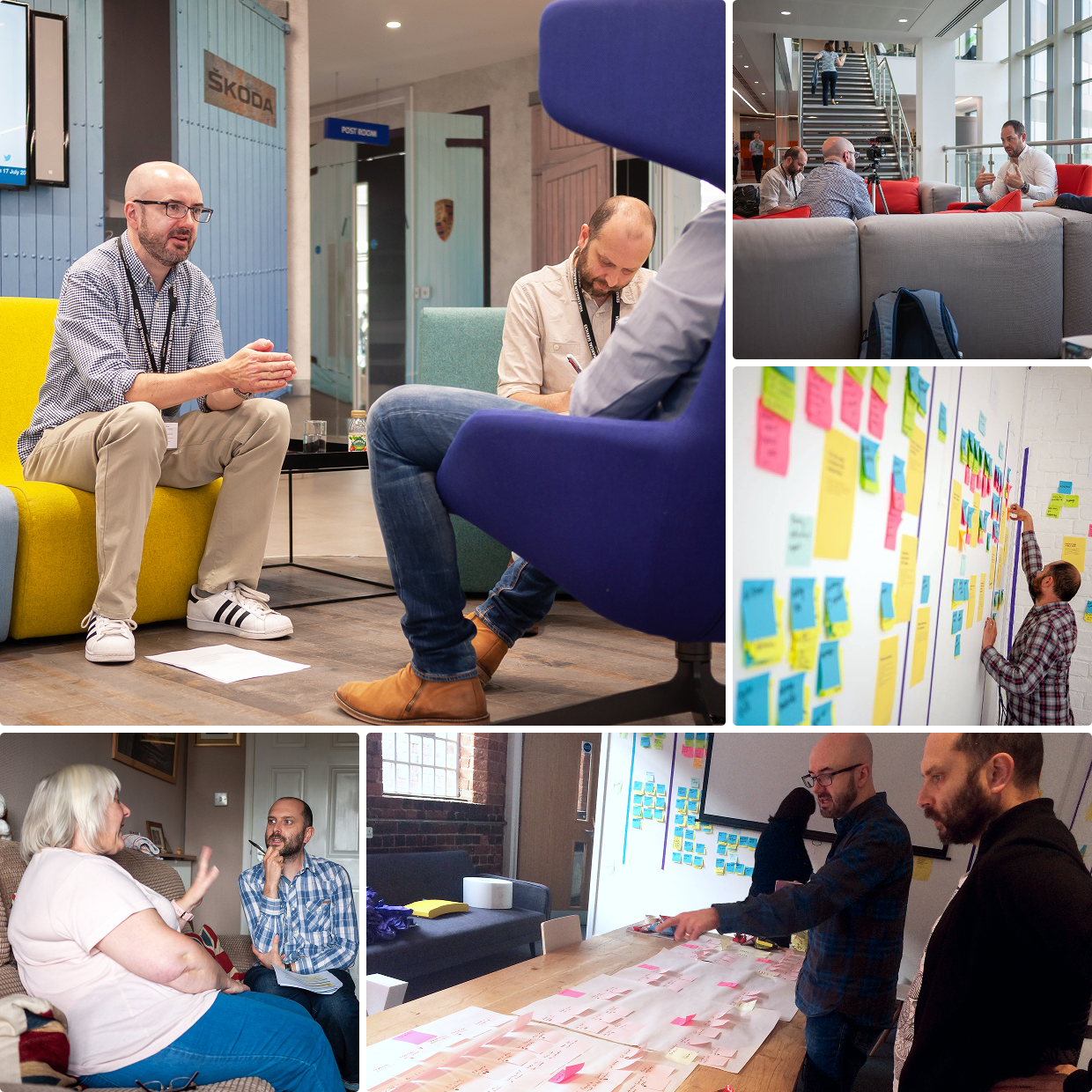
Observing real-life behaviours and in-context experiences to see what people actually do, not just what they say, as well as talking with the people responsible for the customer touchpoint.
— stage five
Synthesis & mapping
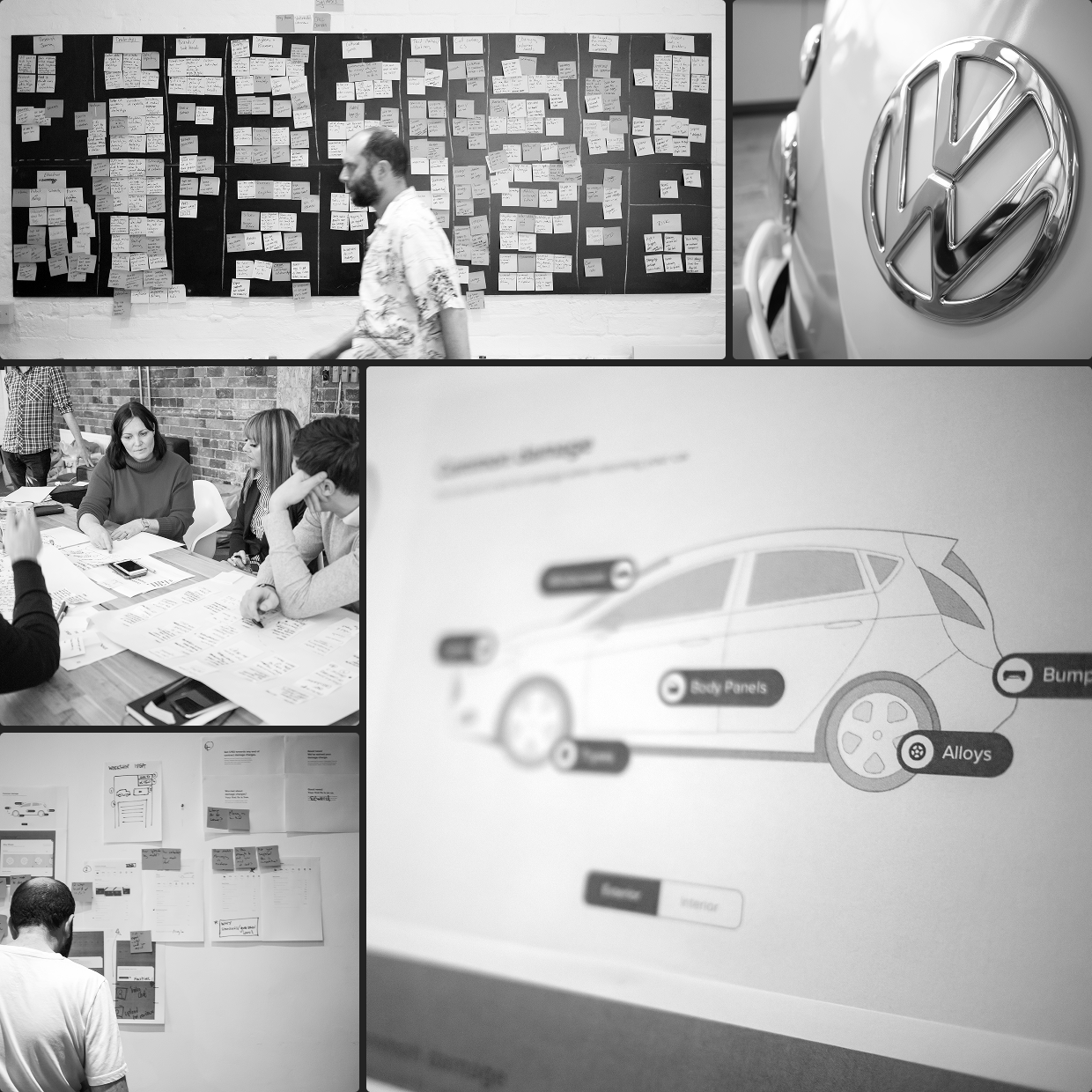
Bringing together all insights to build a clear friction map that shows where the challenges happen, why they occur and how they impact everyone.

This is where our new formula needed to be applied, where impact needed systemising and articulating consistently.
— stage six
Prioritisation & ideation
Grouping the biggest issues, deciding where to focus and generating practical ideas for fixing them.

This is where we co-design what comes next, whether it's a specific initiative, or more focused research.
>
gaining a 10,000ft view
There were problems across the whole end to end journey, but (unsurprisingly) they were mostly clustered around critical points where complexity, third party services and a lack of clarity conspired. This, coupled with incredibly siloed teams and not enough supporting guidance made for some interesting friction themes...
A woman unrolls a porton of a large journey map on a table, showing key customer stages and clusters of frictions underneath an anxiety scale.A woman takes a closer look at a cluster of customer and service frictions on a large journey map, placed on the wall of an office.
— 01

Customers begin their journey confused and unsure what they’re buying

People enter the process with poor understanding of finance products, unclear differences between PCP/PCH/HP, and conflicting advice from friends, brokers and comparison sites, creating anxiety and setting up problems later on.Bringing together all insights to build a clear friction map that shows where the challenges happen, why they occur and how they impact everyone.

— 02

Customers can’t easily manage their agreement or get help when they need it

In-life support is fragmented and inconsistent, with limited self-serve options, unclear account visibility and slow or unhelpful service channels, forcing customers to work far harder than they should.Bringing together all insights to build a clear friction map that shows where the challenges happen, why they occur and how they impact everyone.

— 03

The end of the contract is stressful, unclear and full of unwelcome surprises

Customers feel unprepared for inspections, charges and final settlements, often facing unexpected fees, confusing processes and inconsistent communication at the moment they’re most vulnerable.Bringing together all insights to build a clear friction map that shows where the challenges happen, why they occur and how they impact everyone.

— 04

Loyal customers don’t feel recognised, rewarded or guided into their next vehicle

The renewal experience lacks personalisation, proactive contact and clear pathways, leaving customers to do all the work, and making it far easier for them to drift to competitors.Bringing together all insights to build a clear friction map that shows where the challenges happen, why they occur and how they impact everyone.

>
the dealership black hole
While we focused on solving the key challenges through co-design, a series of sprints and thorough user validation, we also needed to dive into much greater detail on the dealership part of the journey.
It was clear from the initial research that A LOT of the customer challenges and frustrations stemmed from the dealership stage of the journey, but as our initial study was aimed at getting the 10,000ft view in a fairly lean timeframe, an in-depth study of dealerships would need to be a dedicated study.

This is where the Audi-focused research piece came in. As part of this second study, we purely looked at the dealerships themselves, taking a cross section of experiences up and down the country to build a detailed service blueprint of frictions we could then map back against our broader study.
>
impact
400+
unique frictions identified
More than 400 unique business and customer challenges were identified, measured and prioritised as part of the study, helping influence strategic direction.
5
global, strategic pillars created
Following the research and our recommendations, VWAG created 5 global strategic pillars to ensure continued alignment.
32
key initiatives launched
Through co-design, ideation sprints and customer validation, more than 30 separate initiatives have been scoped and launched into VWAG for ongoing development.
VW service design strategy
Prioritised innovation strategy & roadmap
The friction mapping analysis provided a thorough qualitative framework to prioritise areas of focus for Volkswagen and its Financial Services business, enabling them to understand where the most critical areas of focus are, while also providing a foundation for continuous discovery and innovation.

Our strategic research and planning helped to create the core central pillars and principals for the organisation as part of its evolving value proposition.
improved ux & service design
Validated UX & service concepts
Using our rapid prototyping framework, we were able to define and establish all of them to then test, validate and fully scope out as part of the strategic VW roadmap.

‍Building upon the insights from the customer journey mapping, we bought together a group of key stakeholders from across VWFS to work together on developing a series of new service and product propositions.
customer-led focus shift
Cultural CX transformation
By promoting a customer-centric mindset and emphasising the importance of innovation, our engagement contributed to a necessary cultural shift within Volkswagen Financial Services, fostering an environment conducive to continuous improvement and customer-focused decision-making.

Our work laid the foundation for ongoing internal CX-focused activities, as well as provide the right tools to champion ongoing innovation.